Signature projects
ESEIAAT's signature projects in numbers
+170
students involved
4
advanced laboratories
Top
entrepreneurship and prototyping
+700
students in Enforça
Inspire Programme - Student associations

The INSPIRE3 programme is an initiative aimed at students for carrying out real, innovative projects, offering a new educational experience in engineering. It consists of groups of students developing real, cross-disciplinary engineering projects in which they have the opportunity to apply the knowledge and skills they have acquired and to develop new ones, such as creativity, intuition, critical thinking, communication skills, and leadership, project management and negotiation abilities.
It is important to note that the proposals come from the students themselves, who are the true protagonists and are responsible for leading the projects. Academic staff act solely as facilitators, advisors and supervisors.
Student projects
Real engineering challenges: from space to the racetrack, without ever leaving ESEIAAT.


Trencalòs Team
Design and construction of competition unmanned aerial vehicles (UAVs).


Want to experience it first-hand?
Every team is looking for students eager to learn by doing. To find out more and get in touch with the people in charge, visit the page of the association that inspires you most.
UPC FAB Terrassa - Support for teaching
The laboratory network of the Escola Superior d'Enginyeries Industrial, Aeroespacial i Audiovisual de Terrassa (ESEIAAT).
Four spaces, one shared goal: turning students' ideas into reality

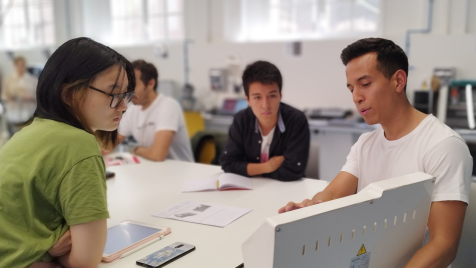
Programme for developing interdisciplinary projects designed to complement academic training by collaborating with professionals from renowned companies.
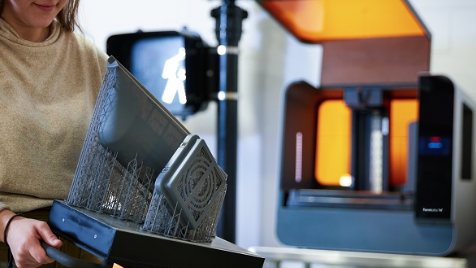
Training and rapid prototyping space. Home to ESEIAAT's FabLab digital manufacturing facilities and equipment.
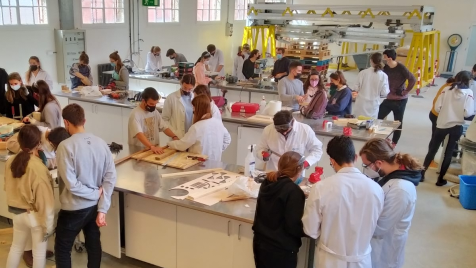
Prototyping space equipped with manual and bench power tools for use by UPC students and academic and administrative staff.
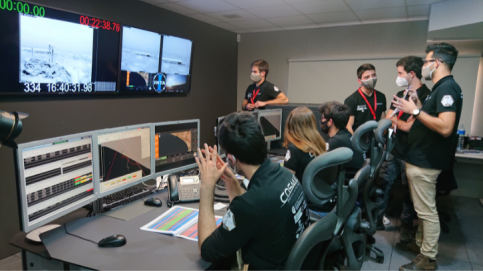
Rocket launch monitoring space serving ESEIAAT's various flagship projects.
CanSat - European challenge to build and launch a mini-satellite

CanSat is an initiative of the European Space Agency in which secondary-school students design, build and launch a mini-satellite the size of a soft drink can, incorporating the subsystems of a real satellite: power, communications and sensors.
It is an international competition with local, national and European stages. In Catalonia, the local stage is organised by ESEIAAT, as part of Catalonia's NewSpace Strategy run by the Department of Business and Labour, in collaboration with the Department of Education and Vocational Training and the Institute for Space Studies of Catalonia (IEEC).
Emprèn UPC ESEIAAT - Entrepreneurship support
A space for students and recent graduates
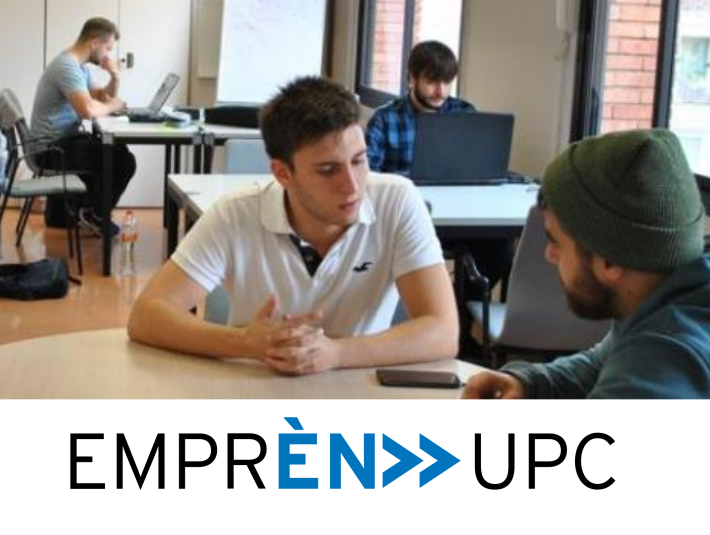
Universitat Politècnica de Catalunya (UPC), through the Emprèn UPC programme (UPC Innovation Management Service), offers its students and recent graduates services, activities and resources to develop innovative projects and new business ideas. It is a pre-incubation/incubation programme for early-stage technology-based projects.
Projects taking part in the Emprèn UPC programme receive advice from the programme team and also have access to mentors and experts in various fields.
You can find us at:
GAIA Building, Rambla Sant Nebridi 22, 08222, Terrassa
empren.terrassa@upc.edu
ENFORÇA
Project to strengthen the initial stage of ESEIAAT's degree programmes

The aim of this project is to strengthen the support tools available to students during the initial stage of ESEIAAT's degree programmes. Its main purpose is to track academic performance and reduce the dropout rate.
The project is structured around a system of monitoring and mentoring that is implemented in three sequential phases:
- AJUDA'T (HELP YOURSELF): A stage prior to starting university, offering self-assessment tests and support materials to help students face their first year.
- APRÈN (LEARN): Focused on the first term, providing tools for organising weekly work and independent learning.
- APLICA (APPLY): Design of a capstone project at the end of the initial stage in which students apply the skills they have acquired.
At the same time, a methodological shift is being introduced, adopting the Degree in Electrical Engineering (GREELE) as a pilot, including the development of short audiovisual materials to promote active learning approaches such as the flipped classroom. This mentoring is integrated into the Tutorial Action Plan through the key role of tutoring staff and mentor students.
Share: